0-1
Education
User Testing & Research
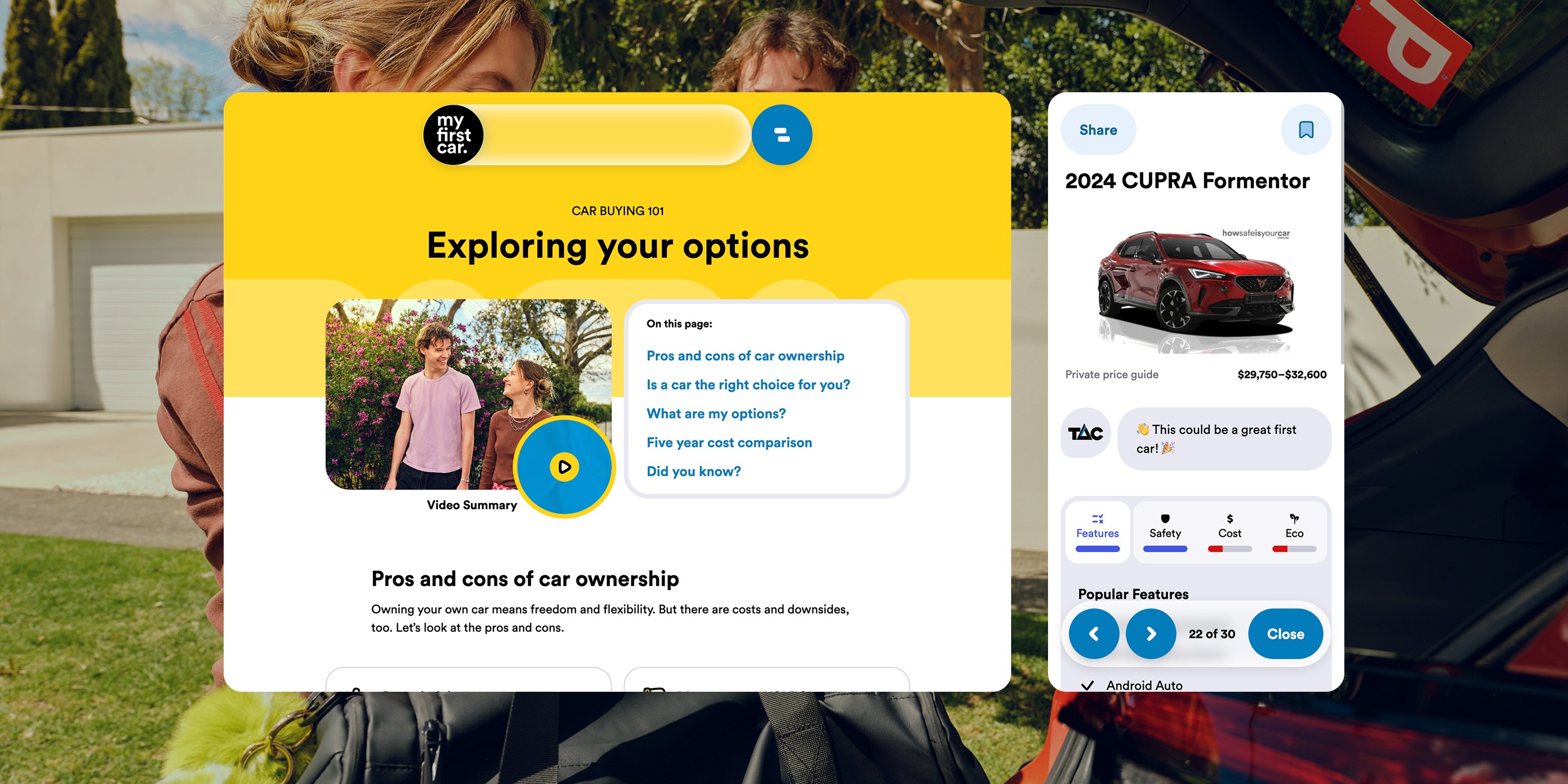

Dylan Styles Design
Launching soon
Building confidence in the solution
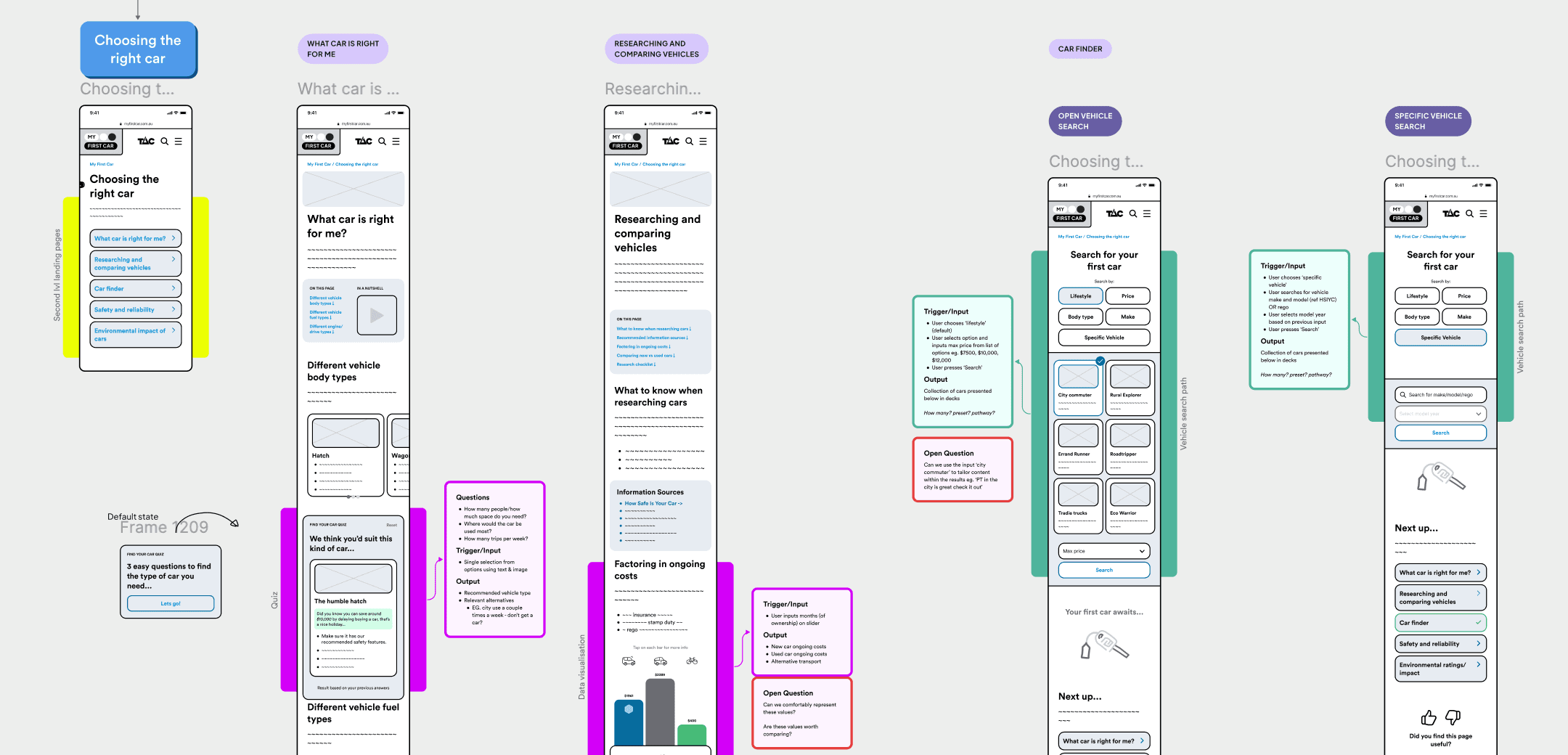
After developing wireframes through multiple iterations, it was time to pressure test some of the assumptions made in my process — this was done first hand through moderated user testing to gather qualitative feedback and enable me to be more reactive in questioning.
Where I needed validation
Where high value flows, functionality and design decisions/assumptions need validating.
Building a bullet proof test plan
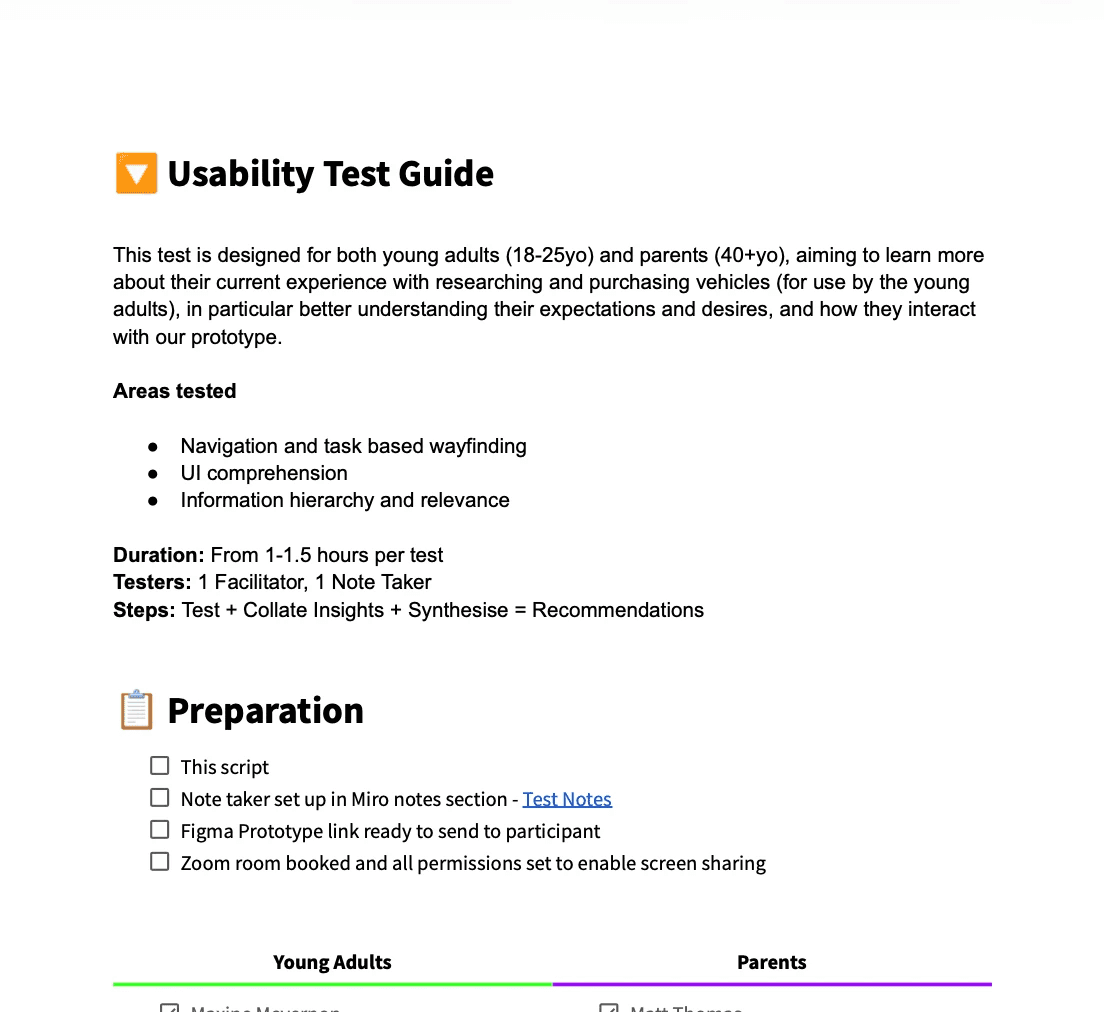
I designed a Figma prototype flow that walked through each focus area and wrote a test guide/script. The test used a variety of methods to understand expectations, comprehension, interaction behaviours and value.
To structure our test notes, I created a Miro table which we would later leverage Miro's AI tools to collate.
Our budget enabled us to test 2 key audience groups over 3 days, resulting in 8 x 90 minute moderated tests.
Recruitment specification:
Mix of metropolitan, sub-urban and rural participants
5 young adults searching for their own car, 18 - 25 y/o
3 parents helping their children to find their first car, 40 - 60 y/o
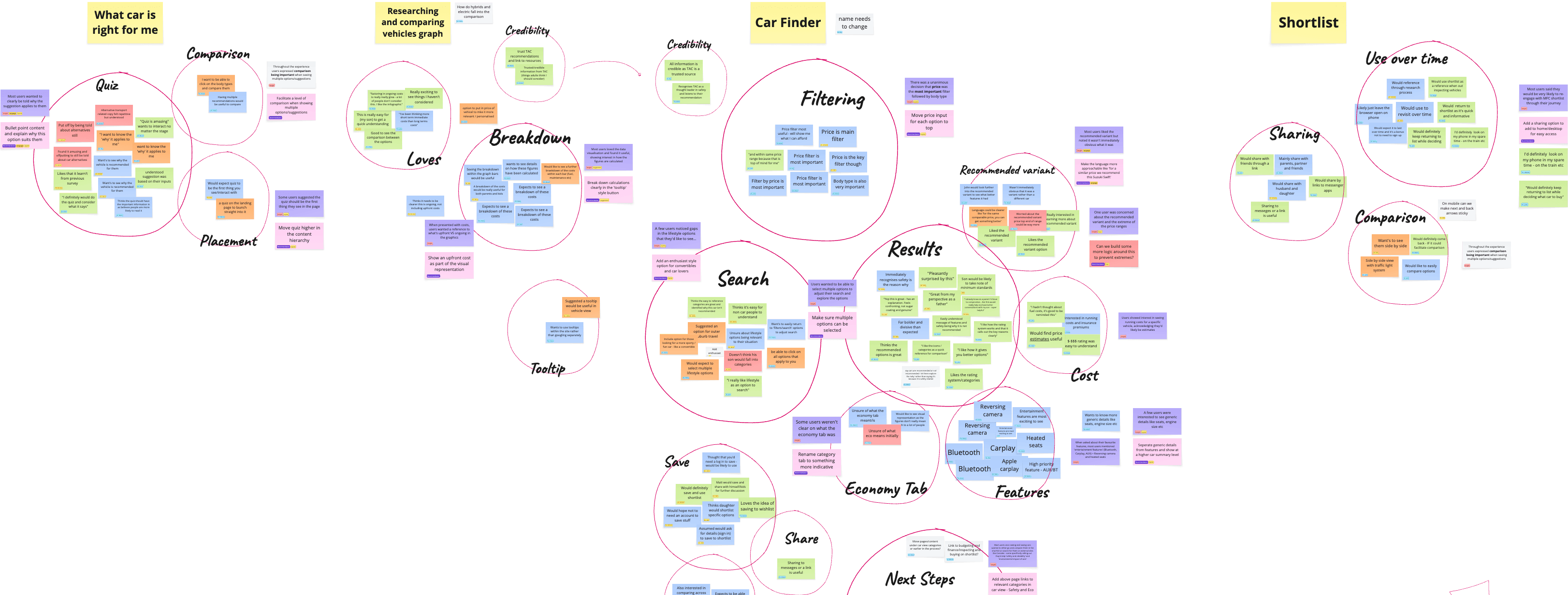
Discovering patterns through synthesis
The insights captured in each session were grouped into key themes in Miro, with the help of Miro AI to organise and extract insights. We also exported the table data into Perplexity to cross reference the findings.
Forming principal insights
I found that our users shared the following overarching sentiment, which formed a set of principals to apply across the experience:
Language significantly influences how receptive our users are to recommendations`
Facilitating comparison throughout the website is important when offering multiple options
Use TACs credibility to build confidence through a process that can cause anxiety
Use cost as a key driver to make suggestions more compelling
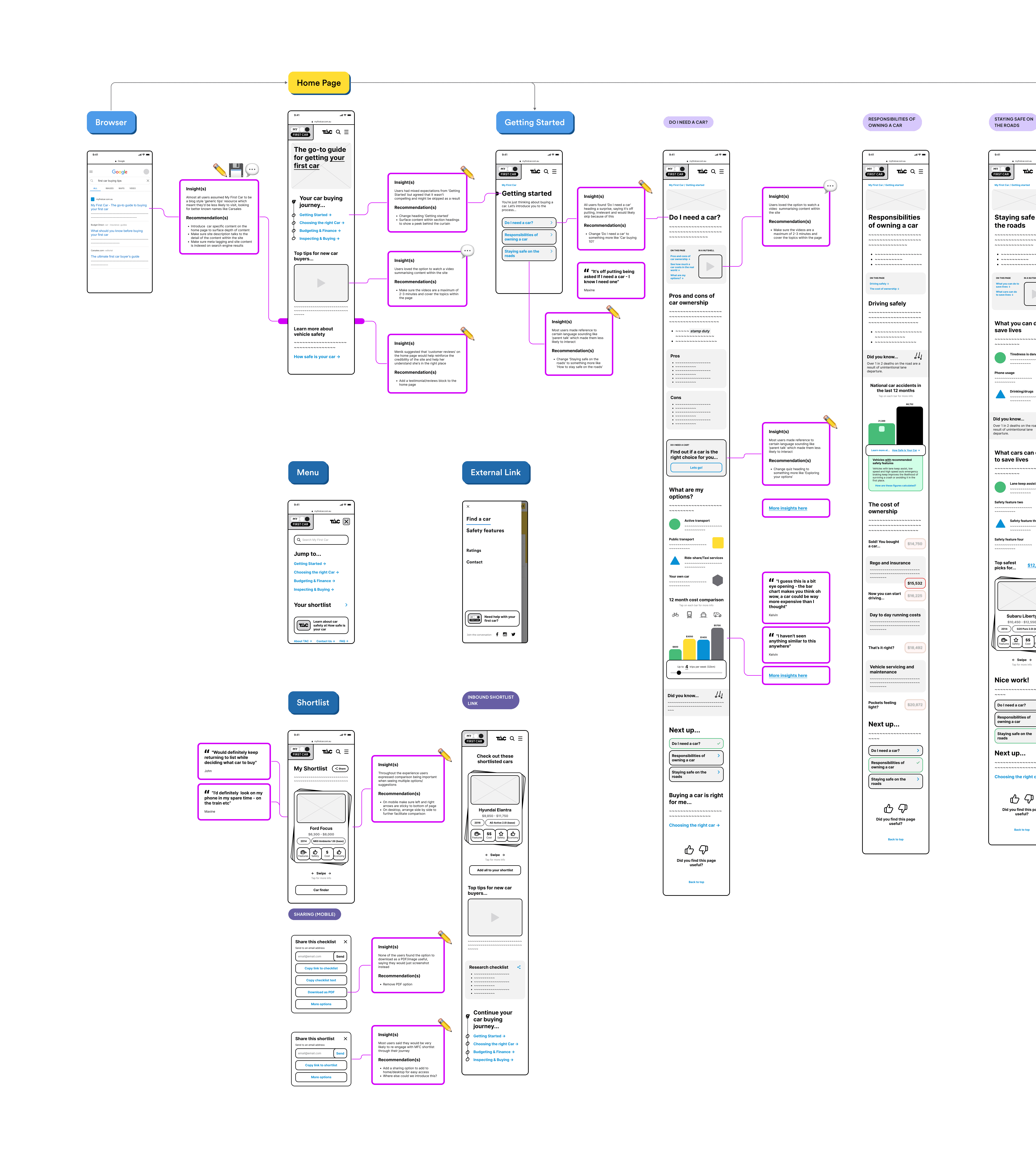
Feeding back into the experience
Based on insights I also formed 56 recommendations across the experience. These were grouped into 6 themes — language, features, layout, credibility, component and SEO.
All recommendations were documented in a ClickUp product definition alongside in-situ annotations across the wireframes, ensuring all learnings made their way to the product!